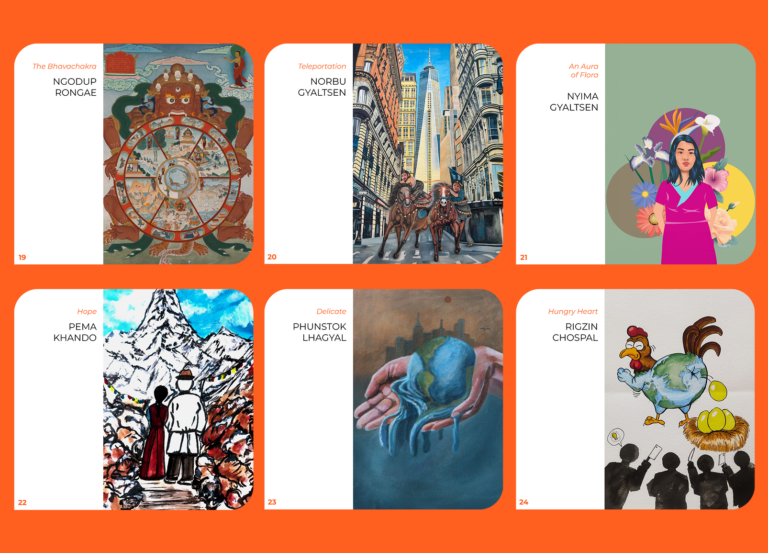
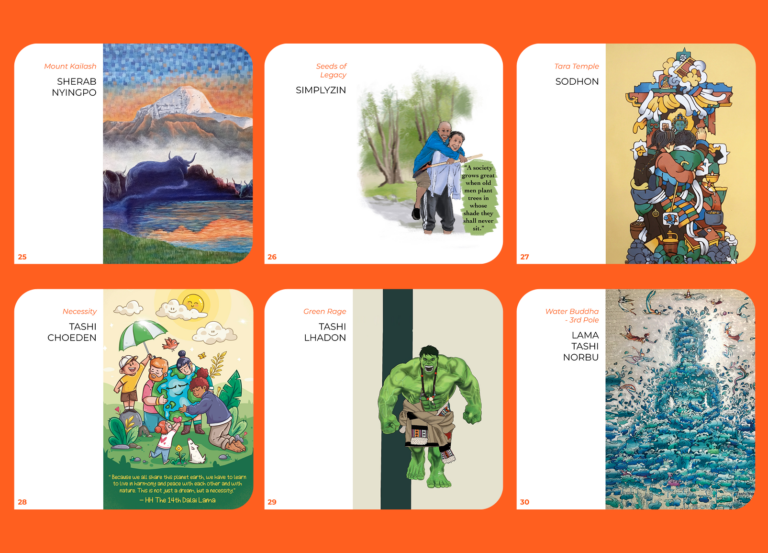
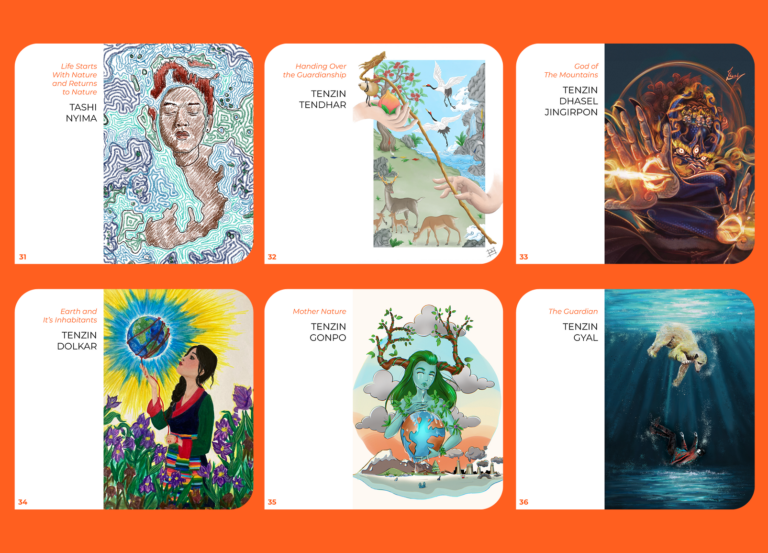
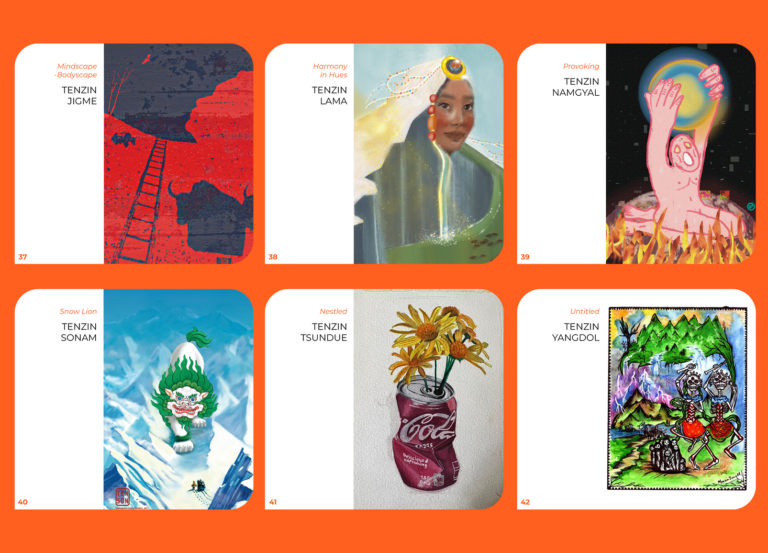
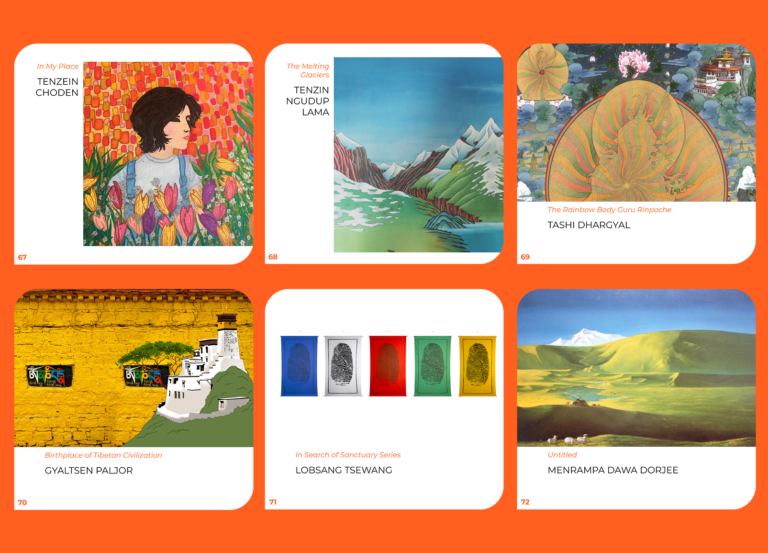
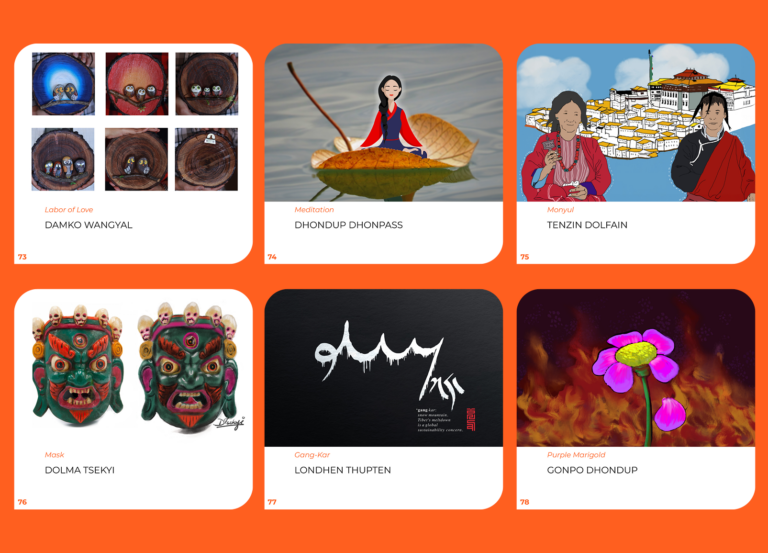
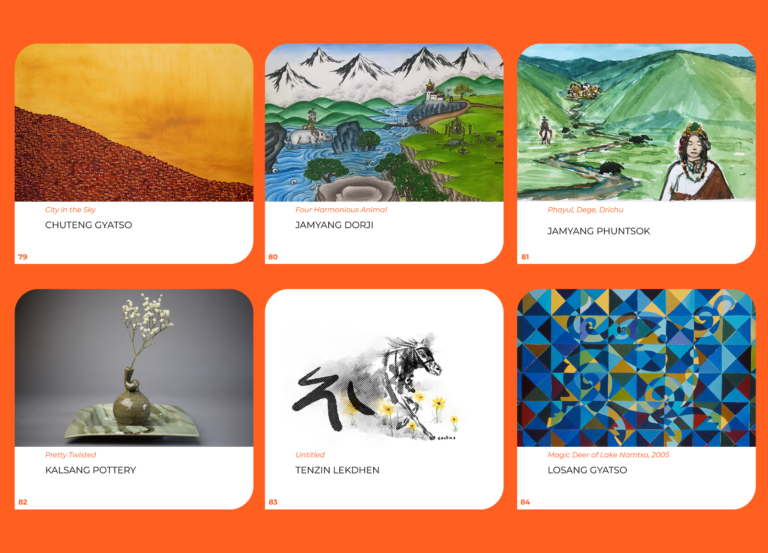
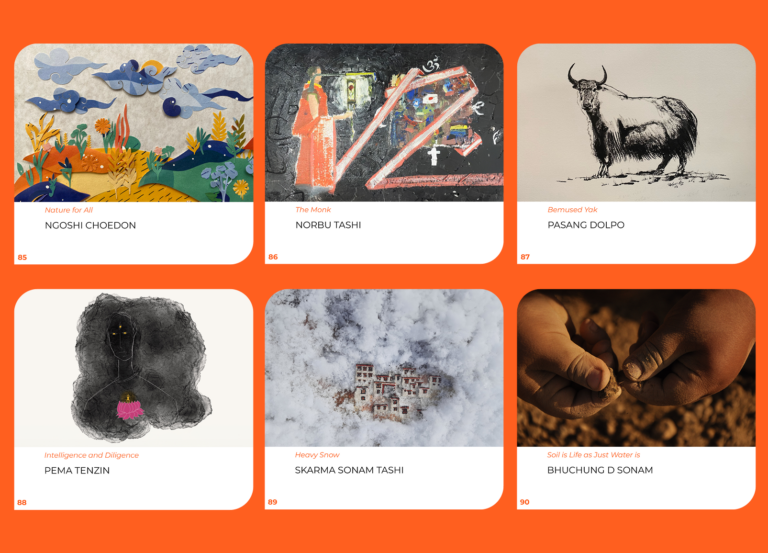
108 Exile Tibetan Artists and Their Expression of Universal Responsibility and the Environment
En route to the Lingkhor with a Japanese friend, who had come to Dharamsala for a course on modern Buddhist philosophy, we encountered a young woman near the Dalai Lama Library and Archives. She was captivated by the cherry blossoms in bloom, plucking one and tucking it behind her ear before starting to take a series of selfies.
As we approached, she began softly reciting om mani padme hum. Though spoken in hushed tones, her words were audible. She apologized for plucking the flower, explaining that she had only meant to admire its beauty and couldn’t resist taking one. My Japanese friend then mentioned, “did you know we call them sakura in Japanese? They symbolize both life and death, beauty and violence. The arrival of spring brings new life, and the blooming cherry blossoms add vitality and vibrancy. Yet, their brief lifespan reminds us that life is fleeting.” His perspective on cherry blossoms struck me deeply.
I carried a copy of “Heart to Heart,” an illustrated book on love and hope for our precious planet by His Holiness the Dalai Lama and Patrick McDonnell in my bag. I asked my friend if he had seen the book. While he had heard about it, he had never actually seen it. I told him I admire the book for its simplicity and unique way of conveying messages about universal responsibility, echoing the Dalai Lama’s teachings on peace, compassion and the importance of recognizing our shared humanity, which call for a compassionate revolution as described in the book. This led me to wonder why Tibetan artists in exile haven’t produced such a book, given that we always hold the Dalai Lama’s messages close to our hearts.
Despite the challenges of adapting to new societies and the influence of China on Tibetan narratives, the diaspora remains committed to preserving its cultural and religious heritage. At the core of this commitment is the Dalai Lama’s vision of peace, which extends beyond the mere absence of conflict to encompass a harmonious coexistence with cultural traditions and cultivating a sense of stewardship towards the planet, recognizing that cultural diversity is intrinsically linked to environmental health and security.
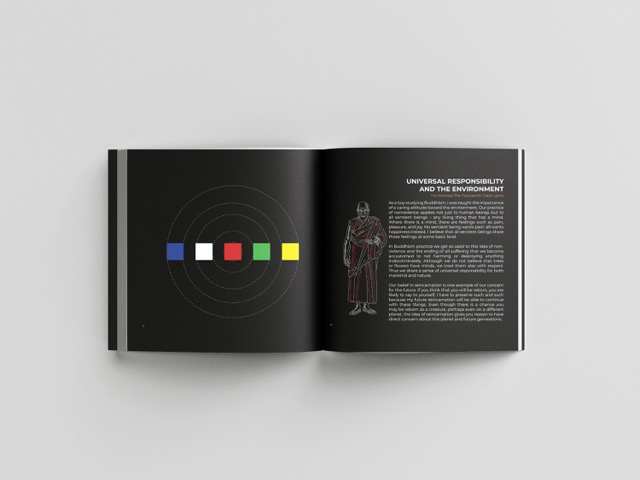
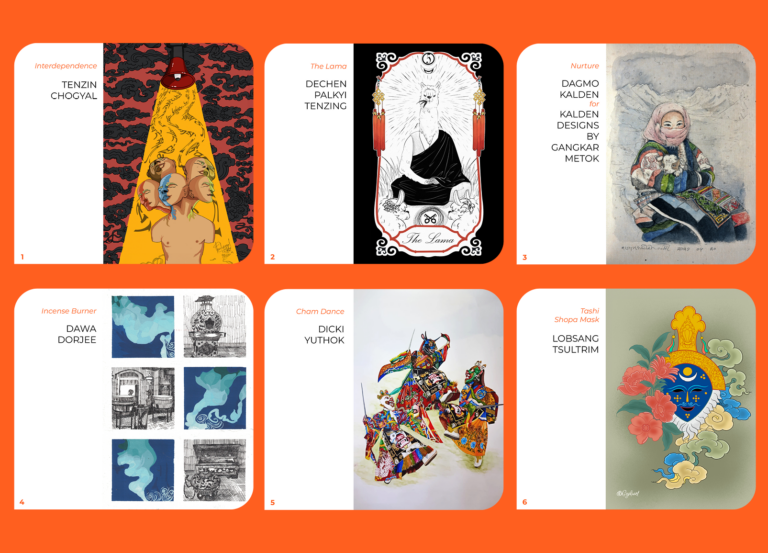
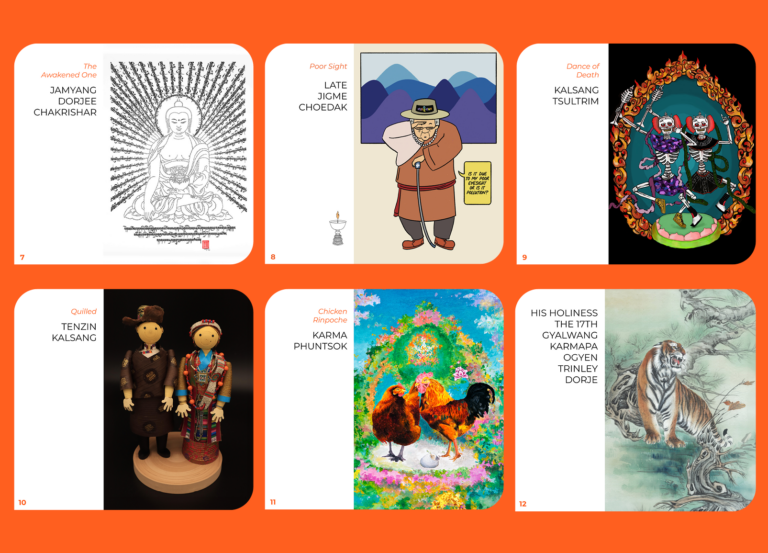
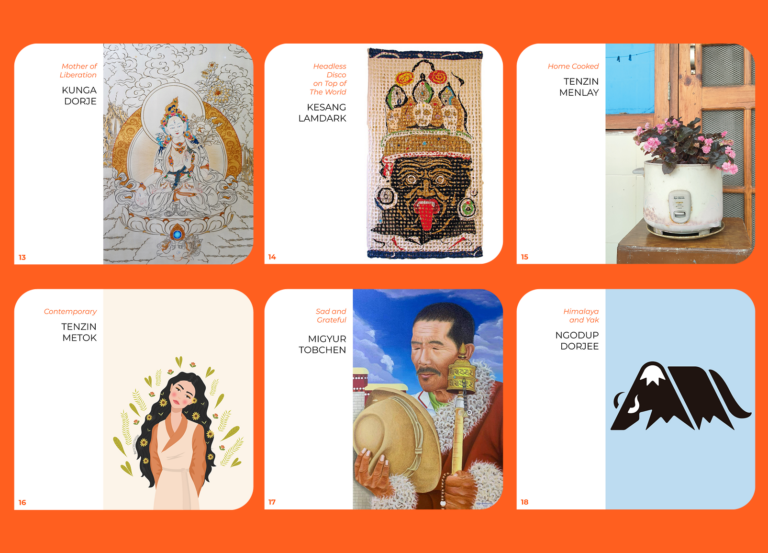
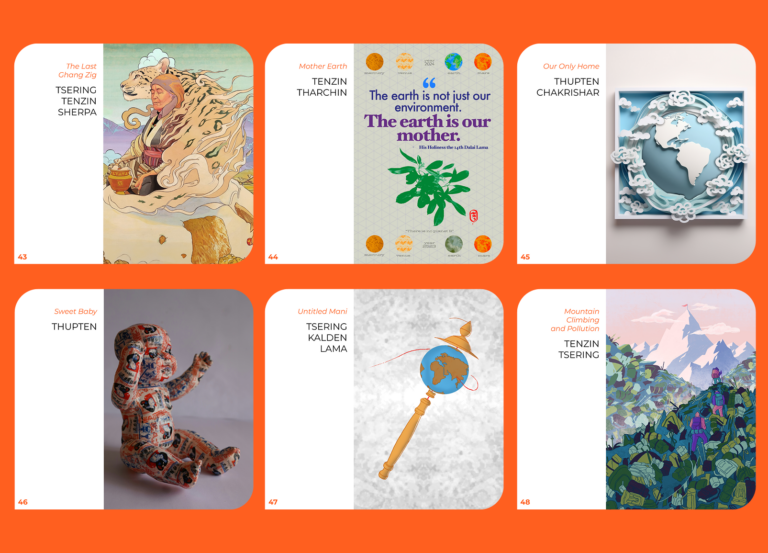
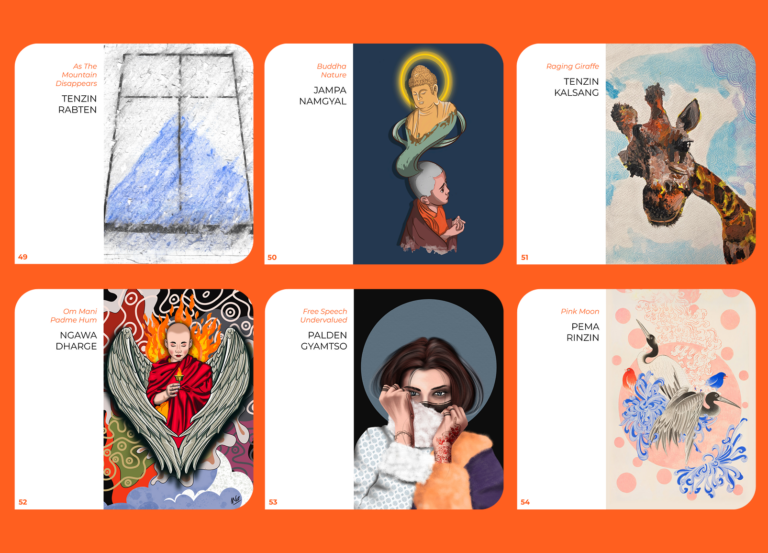
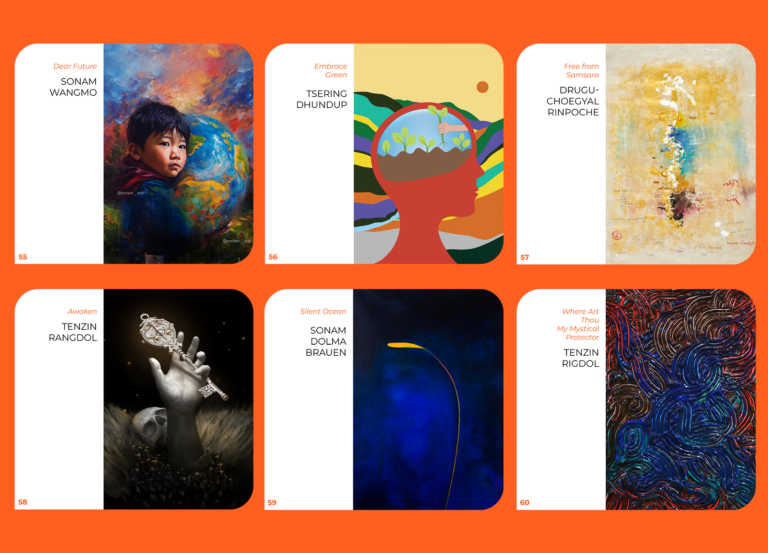
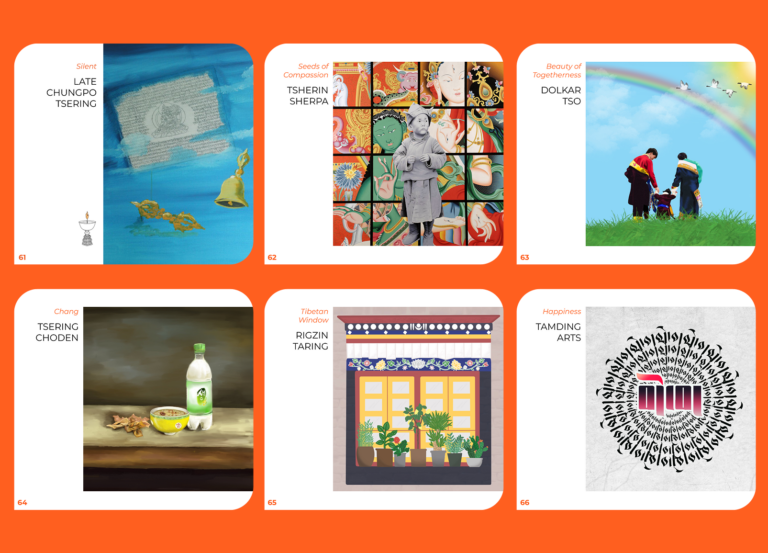
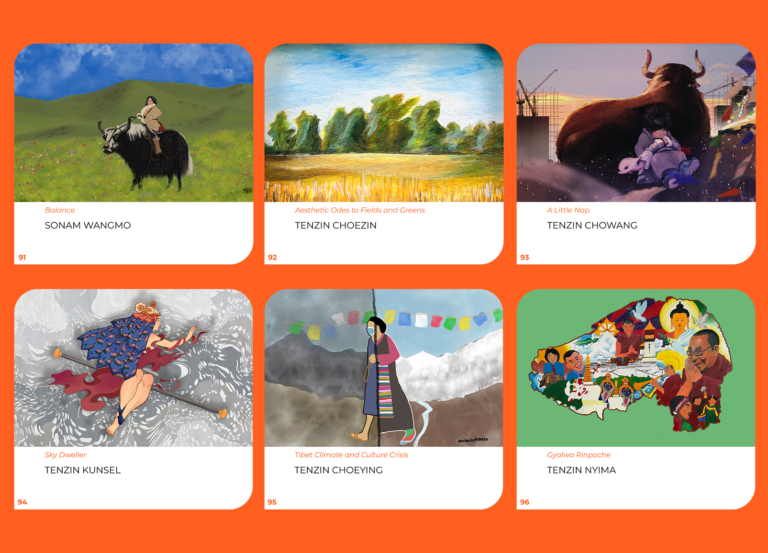
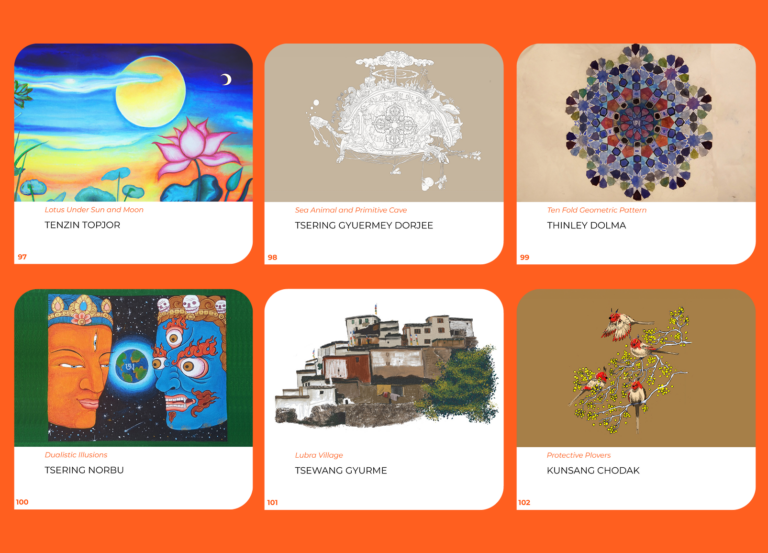
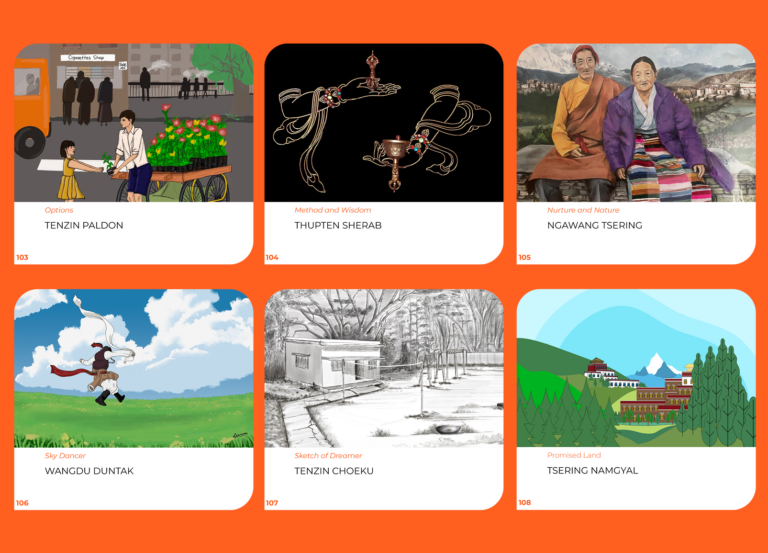
This discourse on cultural expression and shared obligation to promote peace and sustainability among Tibetans in exile has birthed a critical need for innovative preservation strategies, spurring the emergence of unique contemporary art forms. Many of these forms leverage traditional Buddhist symbols and representations not merely as religious expressions but as powerful vehicles for social commentary. Therefore, the “108 Exile Tibetan Artists and Their Expression of Universal Responsibility and The Environment” initiative embodies this pressing necessity, rallying 108 Tibetan artists from exile communities of all backgrounds, from novices to professionals. Each artist interprets environmental stewardship through their art in collaboration with WhiteLine Graphics and The Rowell Fund for Tibet/ICT to amplify their urgent call for action.
Tibetan art, known for its deep spiritual and traditional roots, often features motifs and symbols that promote harmony and balance. Even as modern technology enables new forms of expression like graphic design and digital art, contemporary Tibetan artists remain anchored to their heritage, ensuring their art remains relevant today. Pioneers like Gendun Chophel and Amdo Jampa have been instrumental in shaping contemporary Tibetan art. Gendun Chophel introduced modern techniques to traditional Tibetan painting, significantly altering its trajectory. Amdo Jampa continues this evolution by merging traditional motifs with contemporary themes that resonate globally.Tibetan art, known for its deep spiritual and traditional roots, often features motifs and symbols that promote harmony and balance. Even as modern technology enables new forms of expression like graphic design and digital art, contemporary Tibetan artists remain anchored to their heritage, ensuring their art remains relevant today. Pioneers like Gendun Chophel and Amdo Jampa have been instrumental in shaping contemporary Tibetan art. Gendun Chophel introduced modern techniques to traditional Tibetan painting, significantly altering its trajectory. Amdo Jampa continues this evolution by merging traditional motifs with contemporary themes that resonate globally. In India, the Amnye Machen Institute served as a springboard, playing a vital role in preserving and revitalizing Tibetan culture while adeptly navigating the currents of modernity. By supporting artists and scholars as they explore new artistic avenues while remaining faithful to their heritage, the Institute has fostered a dynamic Tibetan art scene that honors its history while embracing contemporary influences.
To build upon this and leverage the lessons learned and successes achieved by the Institute, the 108 Initiative aspires to chart a course towards a vibrant and sustainable future for Tibetan heritage. To ensure that Tibetan culture can thrive in a rapidly changing world that is increasingly recognizing the interconnectedness of humanity and the planet, this initiative seeks to engage 108 artists in a dialogue concerning universal responsibility and environmental issues, with a particular focus on those impacting Tibet. Drawing from the Dalai Lama’s sentiments, which underscore Tibet’s longstanding dedication to peace and ecological preservation, each artwork provides insight into the varied perspectives and common objectives of these artists, notably emphasizing the environmental challenges confronting Tibet.

I am neither an artist nor an environmentalist; nevertheless, I am directing this project to assemble a collective whose members, though they paint on different canvases, share similar narratives. I consistently choose to appreciate art not solely for its aesthetic appeal but also for its intrinsic connection to nature and its profound impact on society and the world at large. Art, at its essence, is the expression of emotions, thoughts, and observations—drawing from the very nature and circumstances of its creation. Just as nature maintains ecological balance, art helps balance our understanding of the world.